All reading editions · Original PDF
Caution!
1. Nose wires on Wills Wing gliders can disconnect on launch during platform towing leading to profound loss of control and high speed impact.
2. Keyhole safety anchor lock may be ineffective in preventing nose wire disconnect.
3. All pilots planning to platform tow using a Wills Wing glider fitted with the keyhole tang nose catch must, as their last checklist item prior to “go to cruise” positively verify that the nose line is not routed in such a way that it can cause the nose wires to disconnect.
Applies To
This advisory involves platform towing safety, and applies to all Wills Wing gliders manufactured with keyhole tang nose catch systems, which is almost all models introduced since the fall of 1981.
Introduction
Recently, a pilot was seriously injured when the nose wires on his Wills Wing Fusion became detached during a platform tow launch. Preliminary information indicates that the tow system nose restraint attachment line was routed behind the nose tang and in between the wires. Because the nose line, when routed this way, pulls down on the keel and simultaneously forward on the tang, there is a very high likelihood that the keyhole nose tang, unless otherwise restrained, will be disconnected from the nose of the glider. The nose line will hold the wires in place until the nose line is released, which may make this problem difficult to detect prior to the actual launch of the glider. Without the nose wires attached, the pilot will have no pitch control of the glider, and, upon release from the tow vehicle, the glider will typically climb sharply, stall, and dive to the ground.
In June of 1989, Wills Wing published an advisory regarding this potential safety problem, including diagrams showing a suggested correct routing for a nose line and one example of an incorrect routing. These diagrams are reproduced here. The critical consideration is that the nose line must be routed in such a way that there is no possibility that the line can push or pull forward on the tang, the tang handle, or the wires. This advisory and these diagrams were incorporated into subsequent glider owner's manuals for the HPAT, Spectrum, Super Sport, and XC glider models
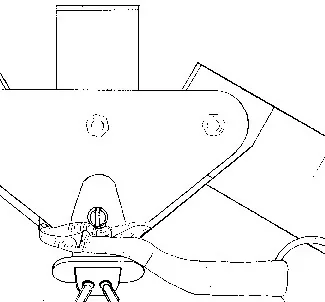
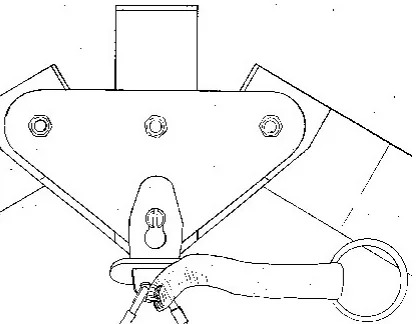
Please note that it is not sufficient merely to insure that the line is routed outside the “V” of the nose wires – it must also not be routed behind the tang handle, or in any way that it can pull forward on the tang.
In June of 1991, following a second incident of this type, we redistributed the advisory, adding the warning that routing the line outside the “V” of the wires but behind the tang handle could also result in disconnect of the wires. In August of 1991, we began manufacture of a pivoting locking device to prevent the keyhole nose tang from being pushed forward and disconnected. The “keyhole anchor lock” is shown in the diagrams below. This locking device was incorporated into all production gliders and made available for retrofit for all existing gliders using this hardware system.
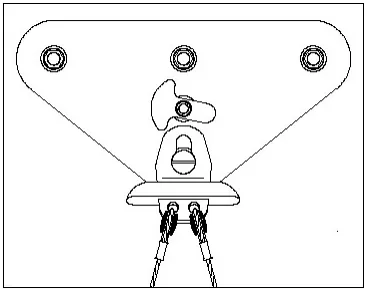
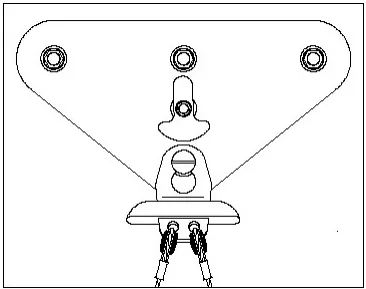
We do not have record of any incidents of this type following the adoption of the locking device, prior to this most recent accident. Preliminary investigation of this recent accident has not been able to establish conclusively whether the locking device was engaged or not prior to the start of the tow during which the wires became disconnected. However, experiments by those investigating the accident on site, which have been repeated by Wills Wing, have indicated that it is possible that a swiveling action of the nose tang during the ground roll prior to launch could cause the safety lock to be rotated to a position that would allow the wires to subsequently disconnect on release of the glider from the truck. It therefore cannot be assumed that the safety lock will prevent the nose wires from being disconnected if the nose line is routed between the wires or behind the tang handle.
Corrective Action
Wills Wing is presently investigating an engineering approach to reducing the likelihood of this type of service failure. We will also be working to achieve maximum distribution of the safety information contained in this advisory. We feel that both approaches are indicated. Approximately 13,000 Wills Wing gliders have been produced which utilize the keyhole nose catch hardware. The only solution which can have immediate impact on pilots flying these gliders is one based on information and education. Even if a successful engineering solution is developed, education will still be necessary, as we have no way to compel pilots to retro-fit their gliders.
We will be asking for input from the platform towing community regarding the workability of various ideas for an engineering solution. We have limited knowledge of the range of different designs and procedures in use for platform tow vehicles. We are mindful of the need to be sure that an engineering modification designed to solve one problem does not create a new safety hazard.
We would greatly appreciate the help of all pilots in distributing this important safety information.
Technical bulletins, current owners manuals and other product support info available at www.willswing.com